Crop Circle Food Habitats
The circular design prompts the name Feed An Island, which coincides with the brand name of the agricultural technologies used by the structure to grow plants. All types of plants can be grown inside and/or outside the habitat. In larger habitats, sun-loving plants are grown in a circular courtyard surrounded by covered curved archways that grow plants in semi-shade. Crop Circle Irrigators imbedded in soil grow plants using 90% less fertilizer and water and yields are twice that of a farm field acre.
Above Ground Single Residence Food Habitats
Single Residence Food Habitats provide accommodation for a crew or family that “works” the farm full-time for profit. A raised deck at the center of the habitat surrounds a 10-foot-deep fish tank. Storage, mechanical and a curved shelving area for growing mushrooms are provided under the deck. A shaded archway surround provides protection for sun delicate plants.
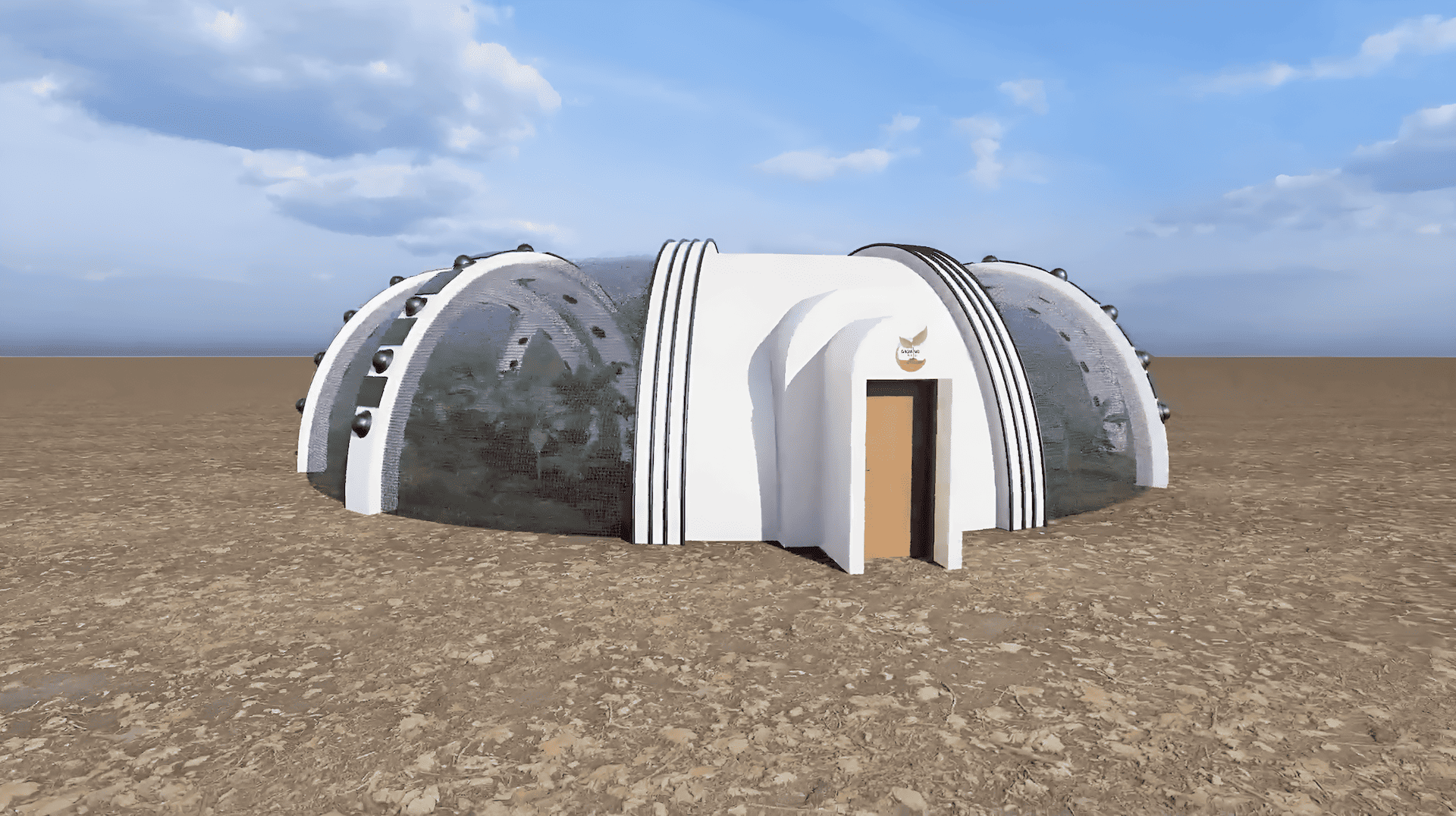
Each of the 20 support arches is equipped with a wind turbine mounted at its apex, forming a fully integrated renewable energy system designed to power the habitat efficiently. These turbines harness natural wind flow to generate a consistent supply of clean energy, while optional solar panels provide a complementary power source—creating a resilient, dual-energy system that reduces reliance on external infrastructure.
This energy independence aligns closely with broader resilience strategies outlined in our island supply chains guide, where reducing dependence on external systems is key to long-term food and energy security.
The Single Residence Food Habitat requires a minimum of half an acre, offering a compact yet highly productive off-grid living solution. For those expanding beyond the core structure, additional land can be used to scale food production using efficient, regenerative growing methods.
Efficient Planting Systems for Maximum Yield
Two highly effective planting approaches can be used outside the habitat to maximize land productivity:
1. Concentric Circle Planting: Crops are arranged in circular patterns around the structure, optimizing irrigation flow, simplifying maintenance, and creating a balanced, visually cohesive growing system. This approach aligns with regenerative agriculture principles and works particularly well in controlled environments.
2. Radiating Row Planting: Crops are planted in rows extending outward like spokes on a wheel. This layout improves accessibility, enhances irrigation efficiency, and allows for easy scalability. It is especially effective for crops that require spacing, such as blueberry, gooseberry, and blackberries.
Both methods integrate seamlessly with the habitat’s design and complement high-efficiency systems such as agroforestry and layered food habitats, enabling higher yields with fewer inputs.
These integrated systems not only increase productivity but also strengthen local food security, reduce resource consumption, and support a more self-reliant lifestyle.
Below-Ground Food Habitats: Efficient, Protected Living
The below-ground Single Residence Food Habitat introduces an innovative approach to sustainable living by positioning the living quarters underground, unlocking several key advantages.
By relocating the residence below the surface, nearly all above-ground space becomes available for food production. This significantly increases growing capacity without expanding land use—an important advantage for island and space-constrained environments.
This concept aligns with high-efficiency production models such as integrated food habitat systems, where maximizing output per square foot is essential.
Another major benefit is natural temperature regulation. The surrounding soil acts as an insulator, maintaining stable indoor temperatures and reducing the need for artificial cooling. In warm climates, this dramatically lowers energy use and enhances comfort.
The underground design also provides protection from extreme weather events, including strong winds, heavy rainfall, and storms—making it highly resilient in vulnerable island environments. These protective benefits align with strategies discussed in our ecosystem resilience and restoration guide.
Privacy and security are additional advantages. The below-ground structure blends naturally into the landscape, creating a quiet, discreet, and protected living space.
Combined with renewable energy systems such as wind turbines and solar panels, the below-ground Food Habitat becomes a fully self-sufficient system—integrating food production, energy generation, and sustainable living into a single, cohesive design.
In summary: Below-ground Food Habitats maximize production space, reduce energy demand, protect against environmental stress, and support long-term resilience—making them an ideal solution for off-grid living in island and remote environments.
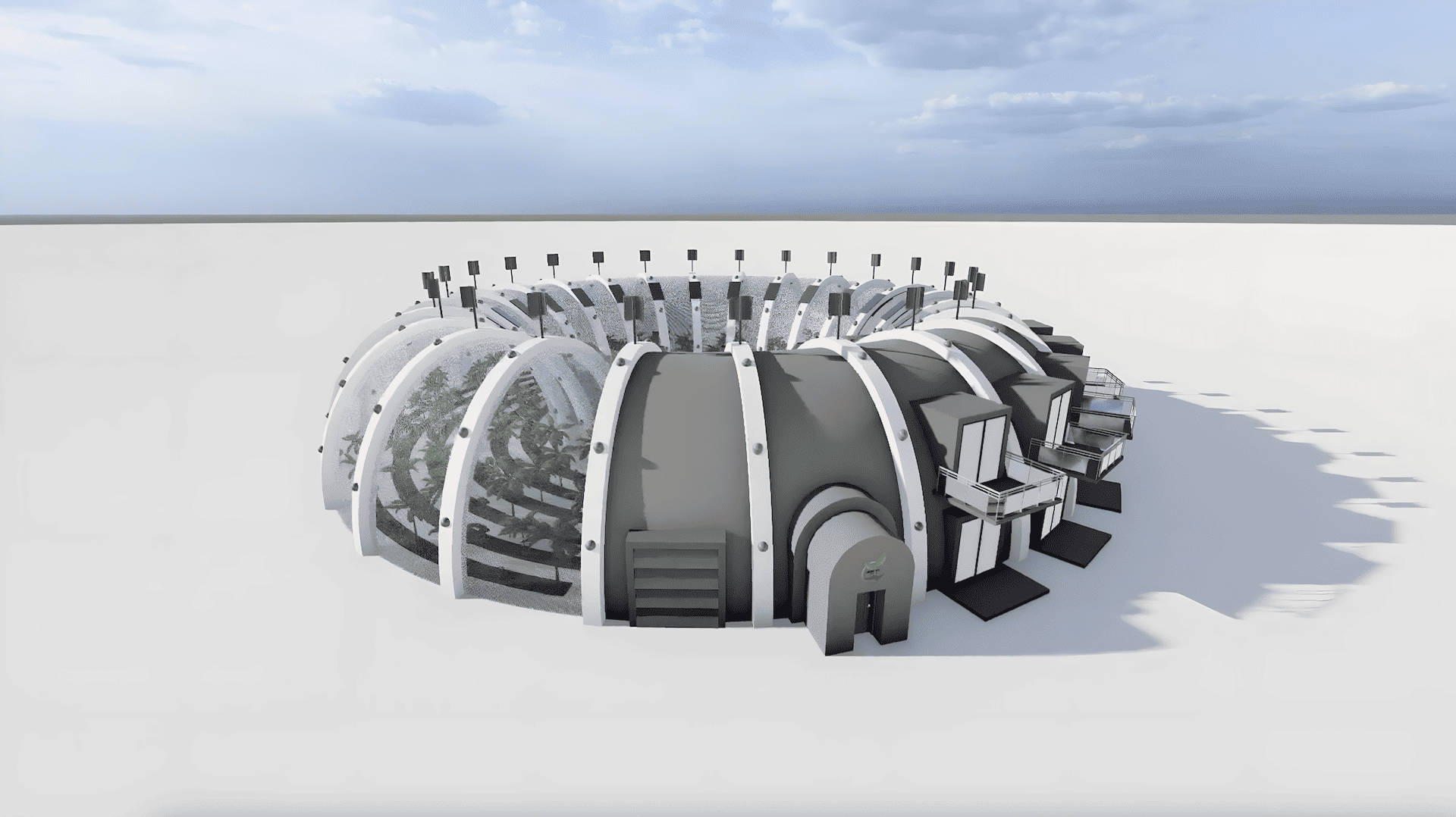
Multiple Residence Food Habitats
Multiple Residence Food Habitats are designed to serve as eco-friendly temporary stay resorts or permanent residential accommodations. These innovative structures blend sustainable living with community-driven agriculture, creating a harmonious balance between humans and nature.
The largest of these Food Habitats requires at least two acres of land, with additional space available if crops are to be cultivated around the structure’s perimeter. Similar to Single Residence Food Habitats, the agricultural design incorporates concentric circles or radiating rows, which extend outward, promoting efficient land use and maximizing food production. At the heart of the Habitat lies a planted spiral, encompassing an acre of land. This spiral serves as the focal point of the community, surrounded by a thoughtfully designed common area where residents can connect with nature and one another. This area offers a serene environment for residents to engage in activities such as plant tending, harvesting food for meals, or simply wandering through the spiral for relaxation and mindfulness.
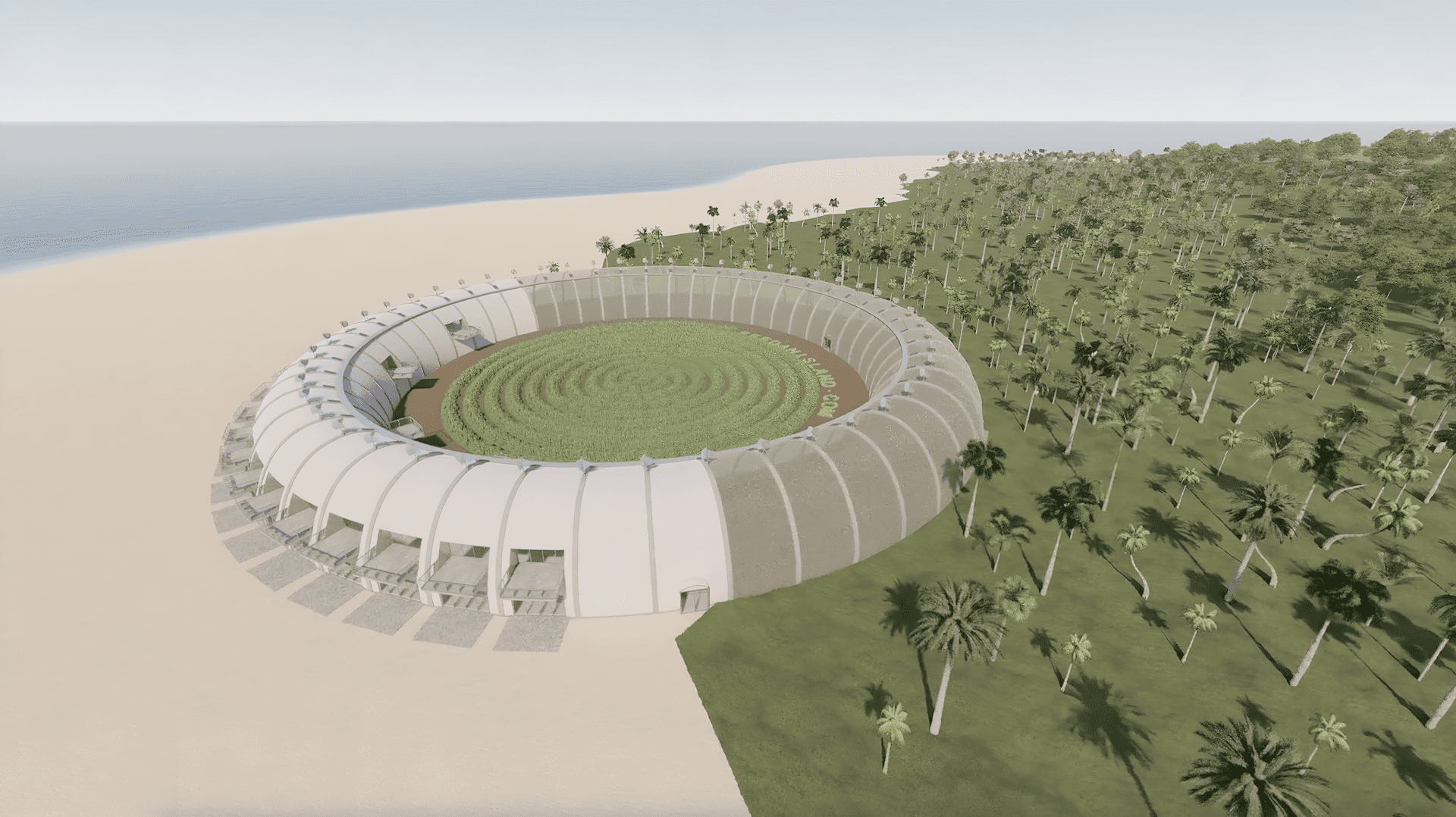
A select few residences within the Habitat are designed with private decks facing the courtyard, providing unparalleled views of the vibrant spiral garden and communal activities. These residences invite residents to immerse themselves in the dynamic energy of the community while enjoying moments of private serenity.
A Multi-functional Courtyard for Sustainability and Abundance
The central spiral garden doubles as a functional farm, producing fresh, organic food during the day to nourish hundreds of residents and visitors on the island. Beyond the spiral, an innovative covered archway houses additional crops, increasing the Habitat’s food production capabilities to feed even more people. Planning tools such as the Food Security Calculator can help illustrate how integrated growing systems like this contribute to long-term food resilience.
Energy and Resource Innovation
The Habitat integrates cutting-edge sustainable technologies, including:
- Arch-mounted wind turbines and solar panels that generate renewable energy to power the community
- Solar-heated piping systems mounted on the arches that provide hot water efficiently
- Integrated water systems that can be complemented by atmospheric water condensers, helping strengthen freshwater security in climates where water supply is limited or inconsistent
- A subterranean seed bank corridor, ensuring the preservation of diverse plant species. This seed bank functions as a vital resource for the entire island, safeguarding the genetic diversity necessary for future agricultural resilience
Redefining Community Living
These Multiple Residence Food Habitats offer more than just accommodation; they are a transformative lifestyle experience. They provide a model for self-sufficient, eco-conscious communities, where residents can embrace the simplicity of living off the land while enjoying modern comforts.
The vision of Food Habitats aligns with a sustainable future, where housing and agriculture work in unison to support thriving, resilient communities that live in harmony with nature. This blueprint serves as a prototype for islands and regions seeking innovative solutions to food security, energy independence, and community well-being.