Explore Island Pages
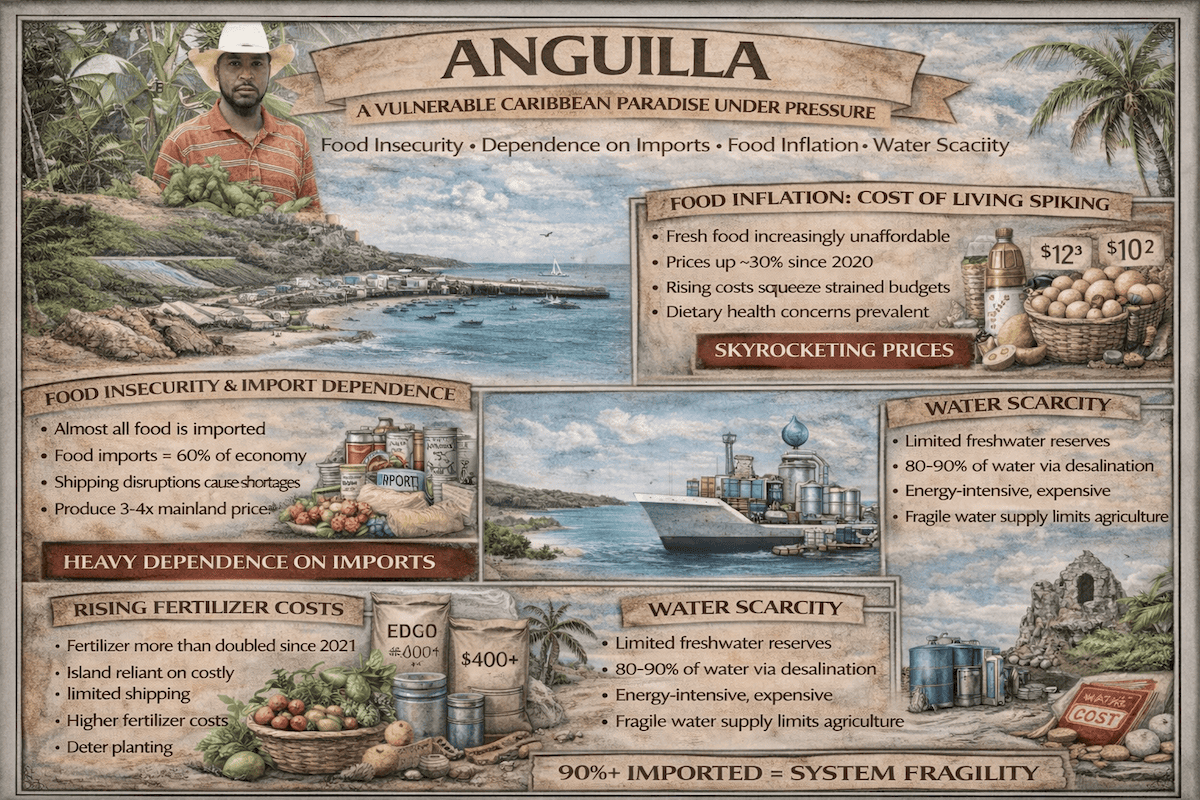
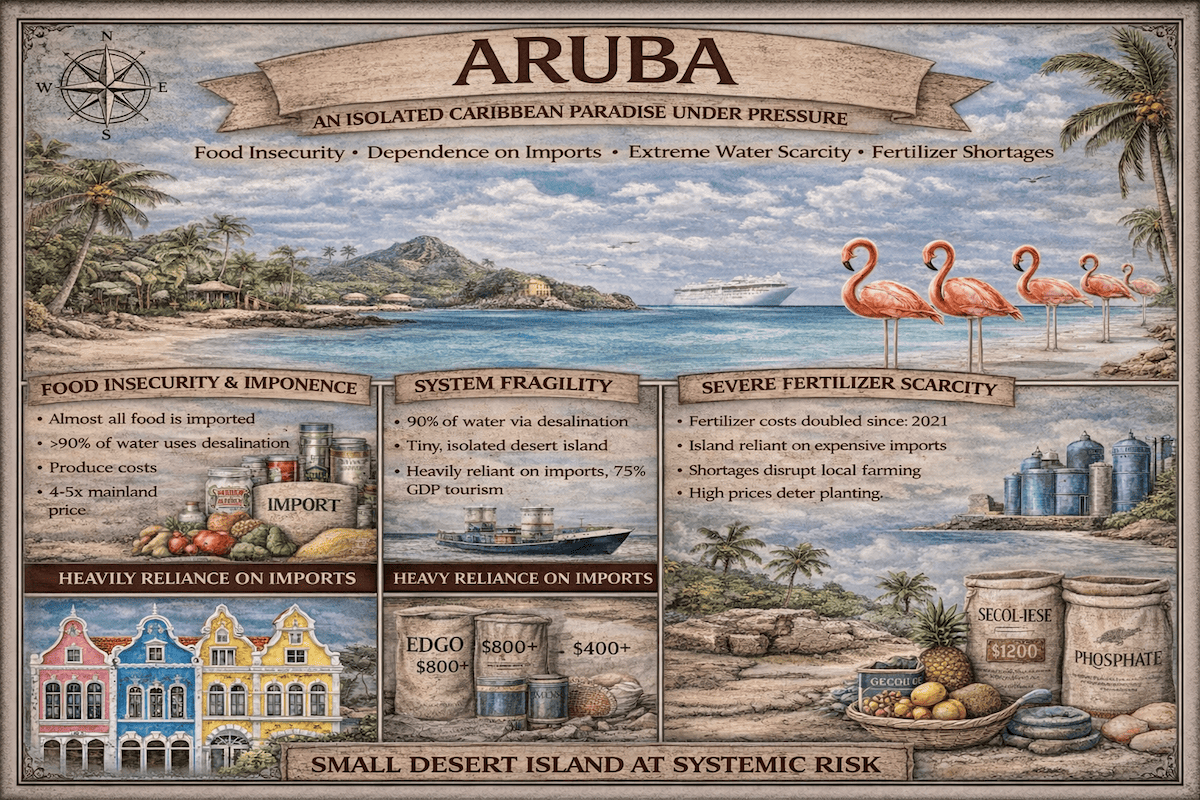
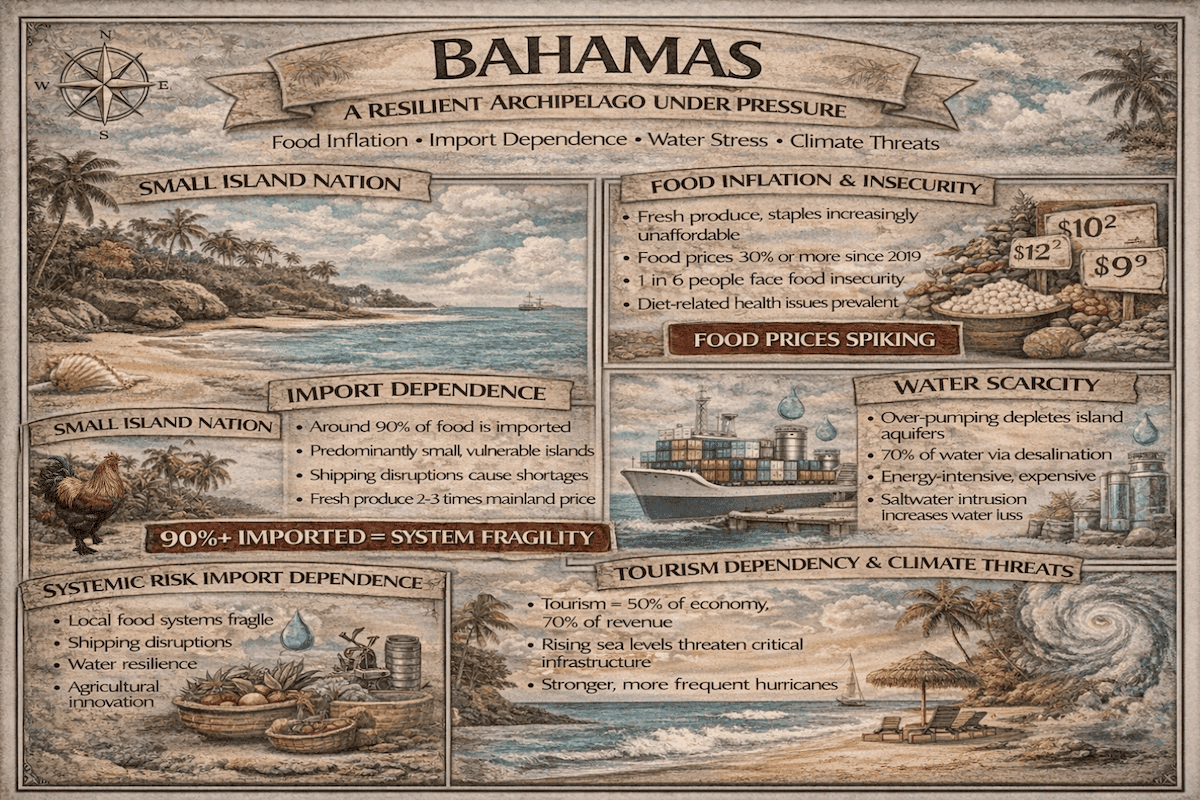
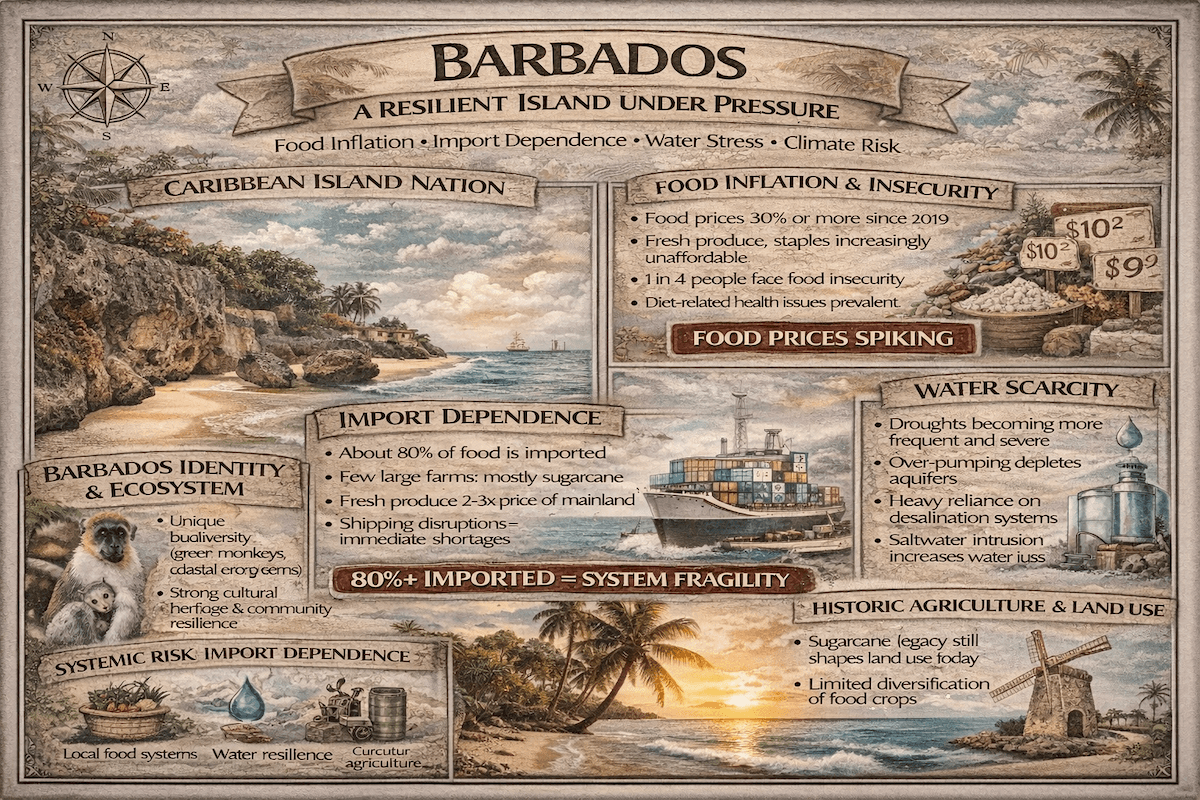
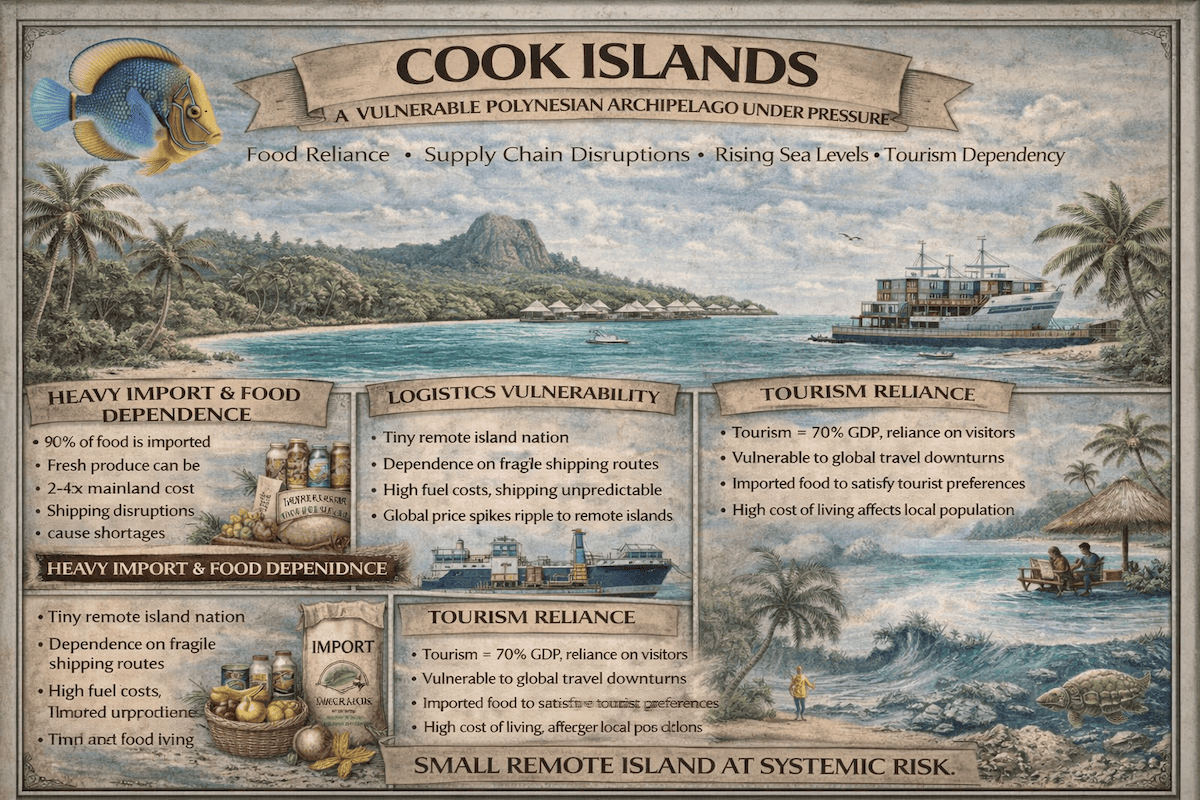
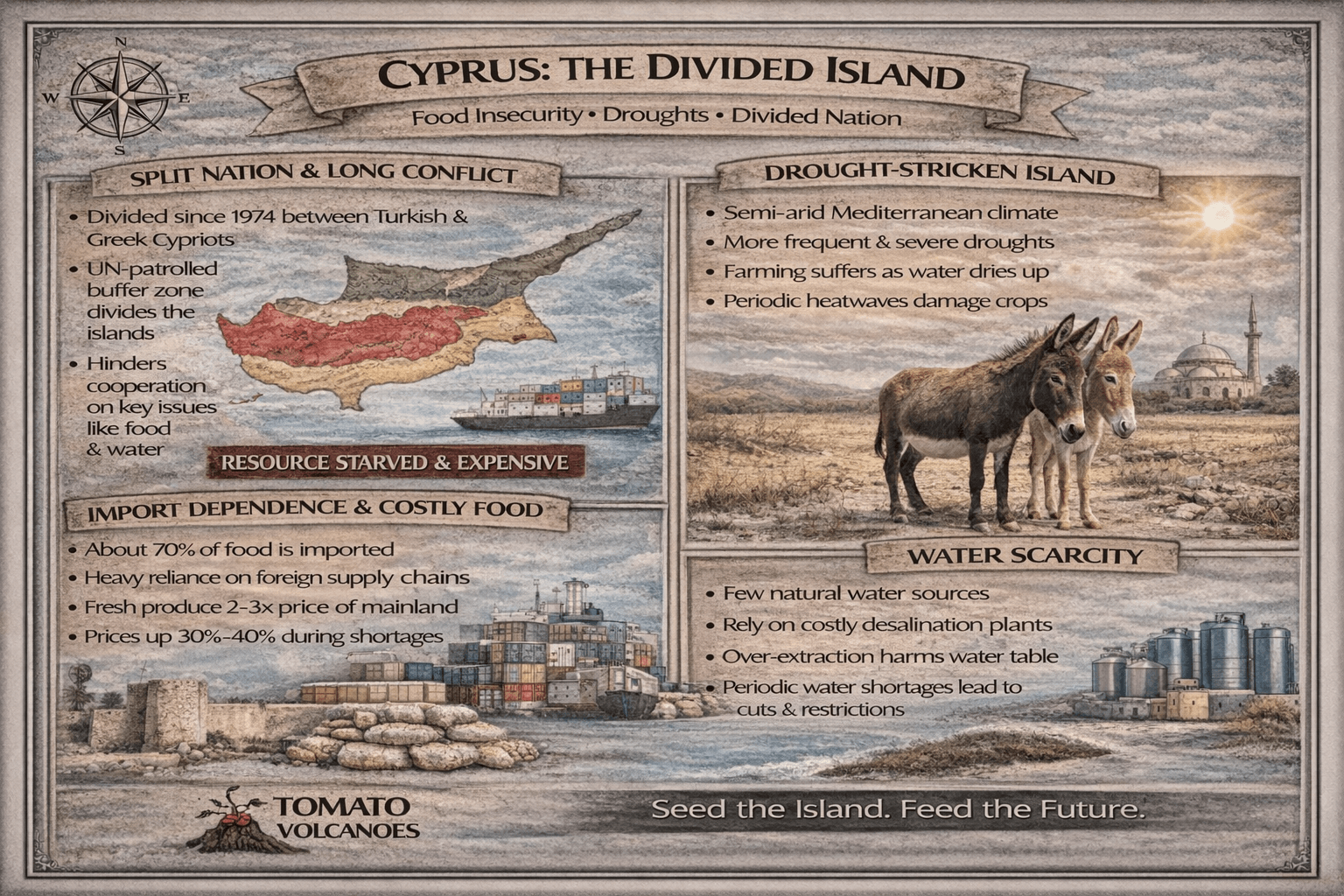
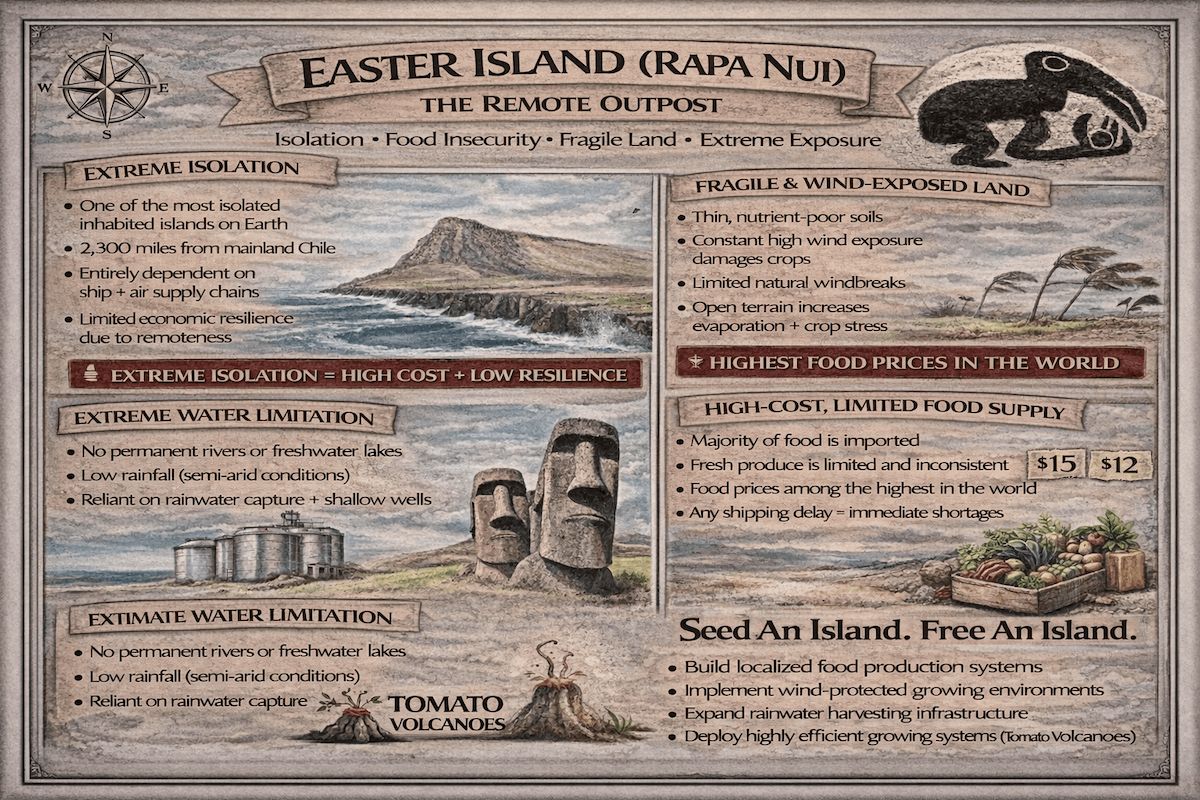
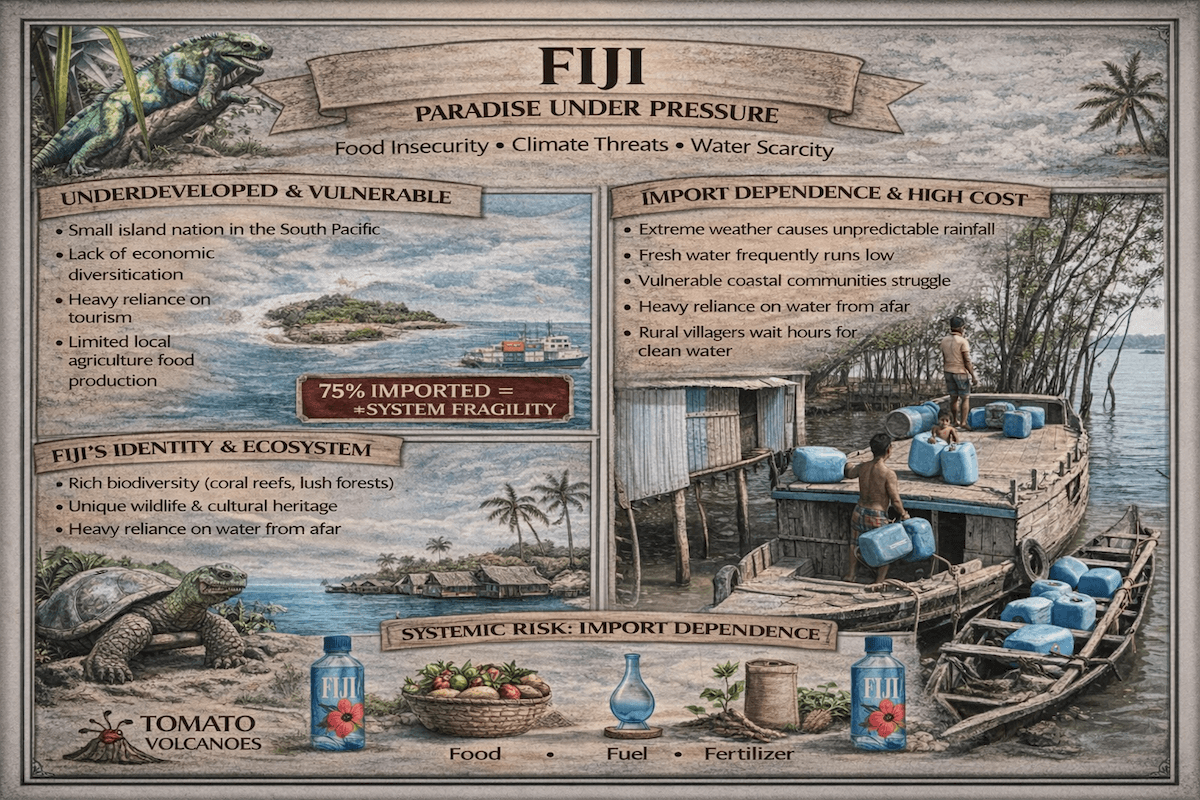
Browse island-specific food security pages and compare the challenges, constraints, and local production opportunities facing each location.
ISLANDS • FOOD SECURITY • IMPORTS • WATER • RESILIENCE
Many island communities depend heavily on imported food, leaving them exposed to shipping disruptions, rising transport costs, fertilizer inflation, limited freshwater, land constraints, and extreme weather. This island hub compares those challenges by location and highlights practical opportunities for stronger local food production.
Some islands face volcanic terrain and limited freshwater. Others struggle with degraded soils, salt exposure, invasive species, long supply chains, or tourism-driven demand. Yet across regions, the central challenge remains the same: how can an island grow more food locally using less water, less land, and fewer imported inputs?
When an island imports most of its food, even modest freight delays, weather events, or price shocks can affect affordability and access. Building stronger local agriculture is one of the clearest ways to improve resilience, reduce risk, and keep more food value within the local economy.
This hub helps you compare where islands are most affected by supply chain dependence, where water is the main barrier, where land is the limiting factor, and where local growing systems could make the biggest difference.
Many islands depend heavily on imported food because they do not have enough freshwater, affordable farmland, or local production capacity to meet demand year-round. Smaller and more remote islands often face the greatest pressure, especially where shipping costs are high and storms or drought can interrupt supply.
That pattern appears across the Caribbean, Pacific, and Indian Ocean. While each island has a different history and geography, imported food dependence remains one of the most consistent themes in island food security.
Island food security is difficult because islands often face multiple constraints at the same time: limited arable land, expensive or scarce water, fragile soils, long shipping routes, higher fertilizer costs, and exposure to hurricanes, drought, salt, or heat stress.
That is why the best island agriculture strategies are usually efficient, protected, and adaptable. Small-footprint systems, water-smart growing, agroforestry, and practical planning tools can help islands produce more food locally with less pressure on land and freshwater resources.
Browse island-specific food security pages and compare the challenges, constraints, and local production opportunities facing each location.
This comparison highlights how island food security often comes down to a few recurring pressure points: imported food, water, land, cost, and resilience.
| Island | Main Pressure | Common Constraint | Opportunity |
|---|---|---|---|
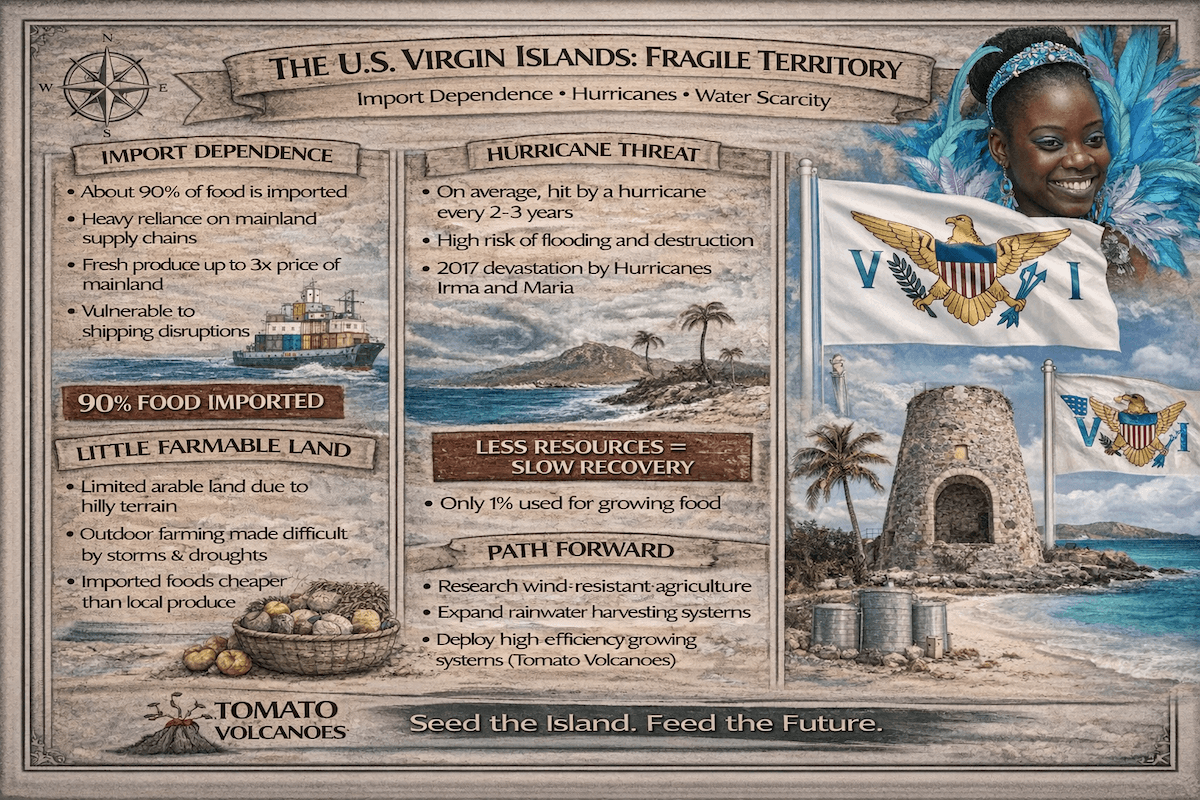
| USVI | Food imports | Water scarcity | High-density local systems |
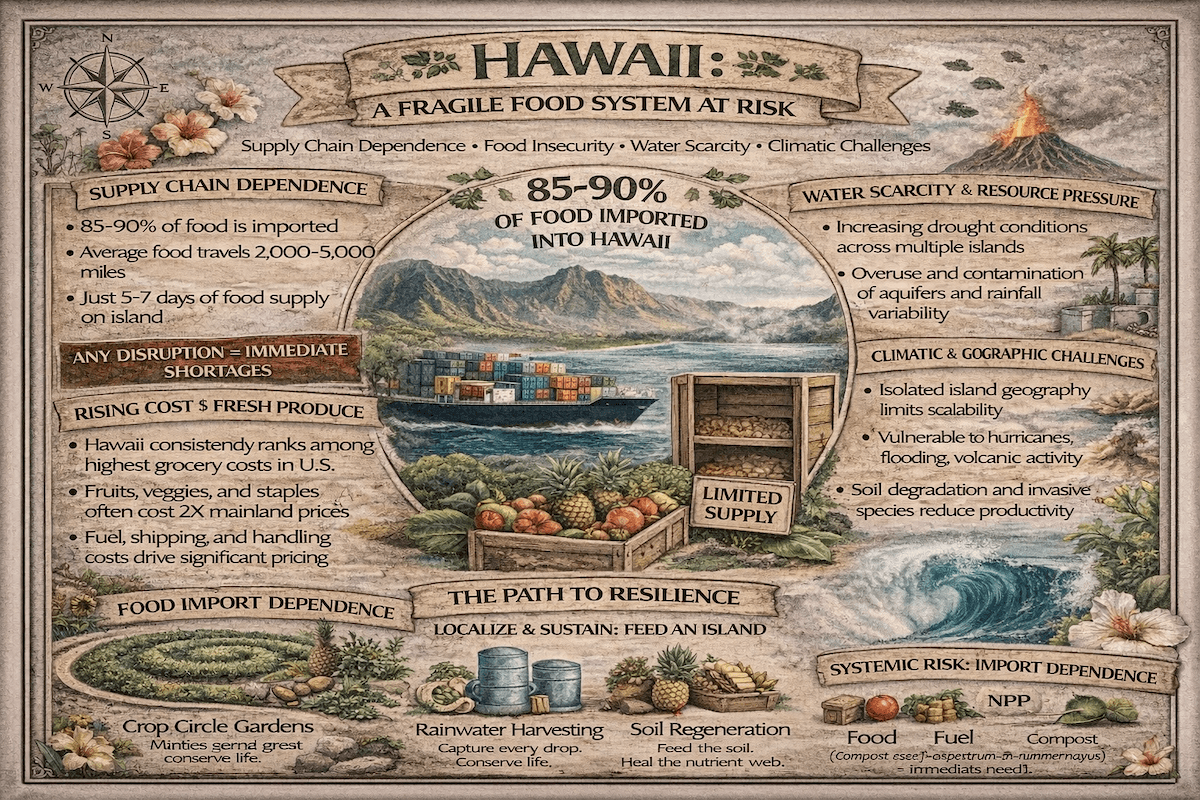
| Hawaii | Imported food dependence | Land cost + water | Local production expansion |
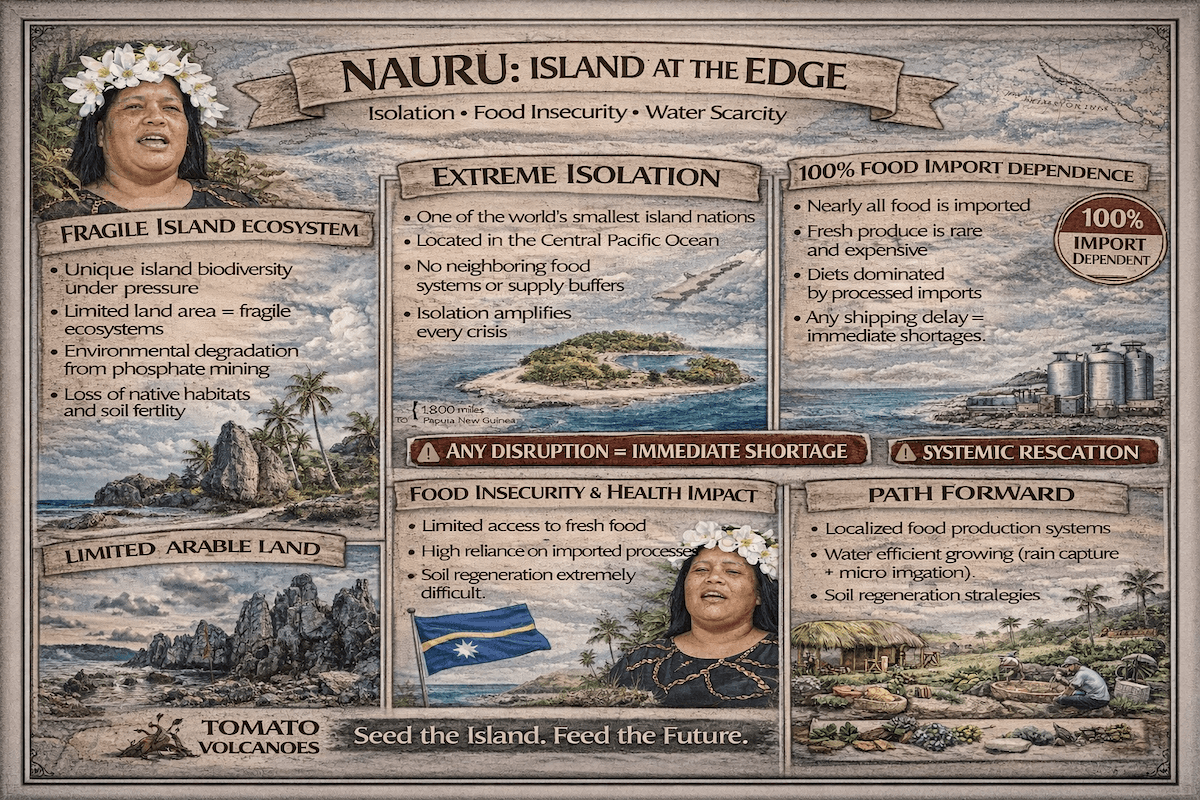
| Nauru | Extreme import dependence | Soil and land limitations | Controlled growing systems |
| Barbados | Import reliance | Climate + land constraints | Water-smart agriculture |
| Bahamas | High food import dependence | Water stress + fragile supply chains | Protected local growing systems |
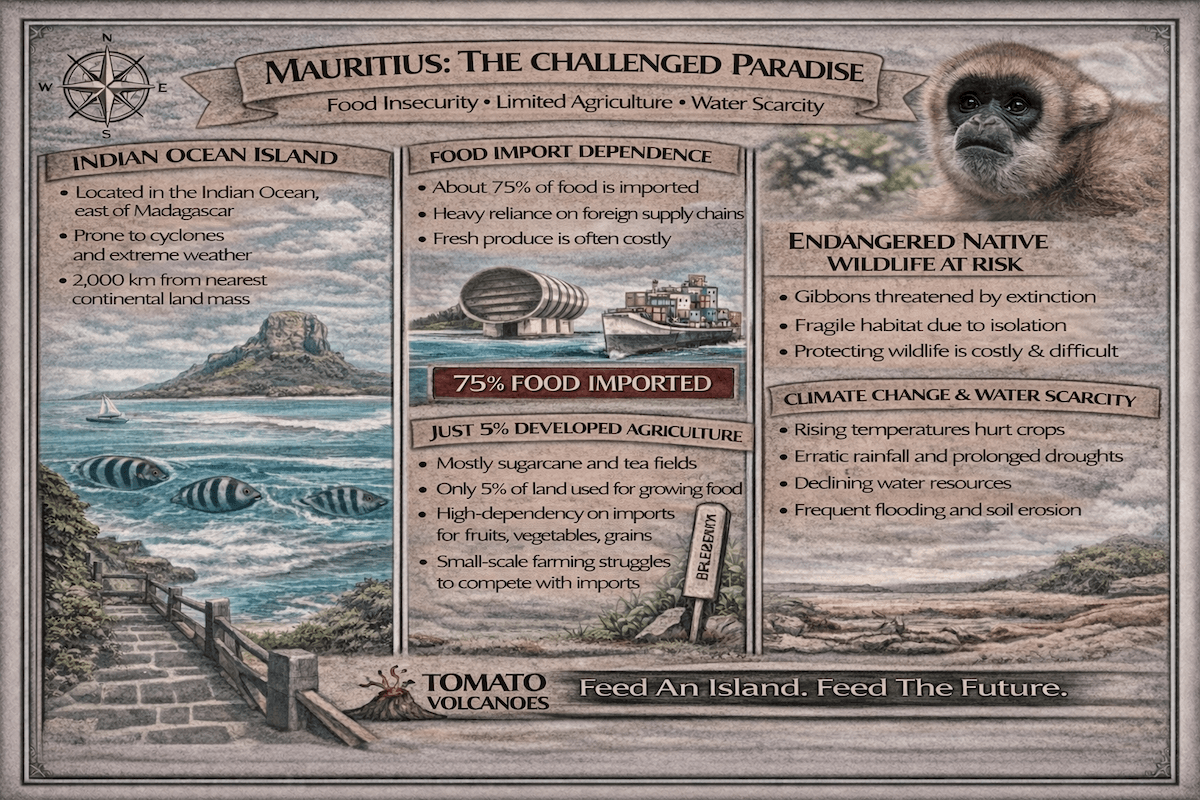
| Mauritius | Food imports | Climate pressure | Agroforestry + yield efficiency |
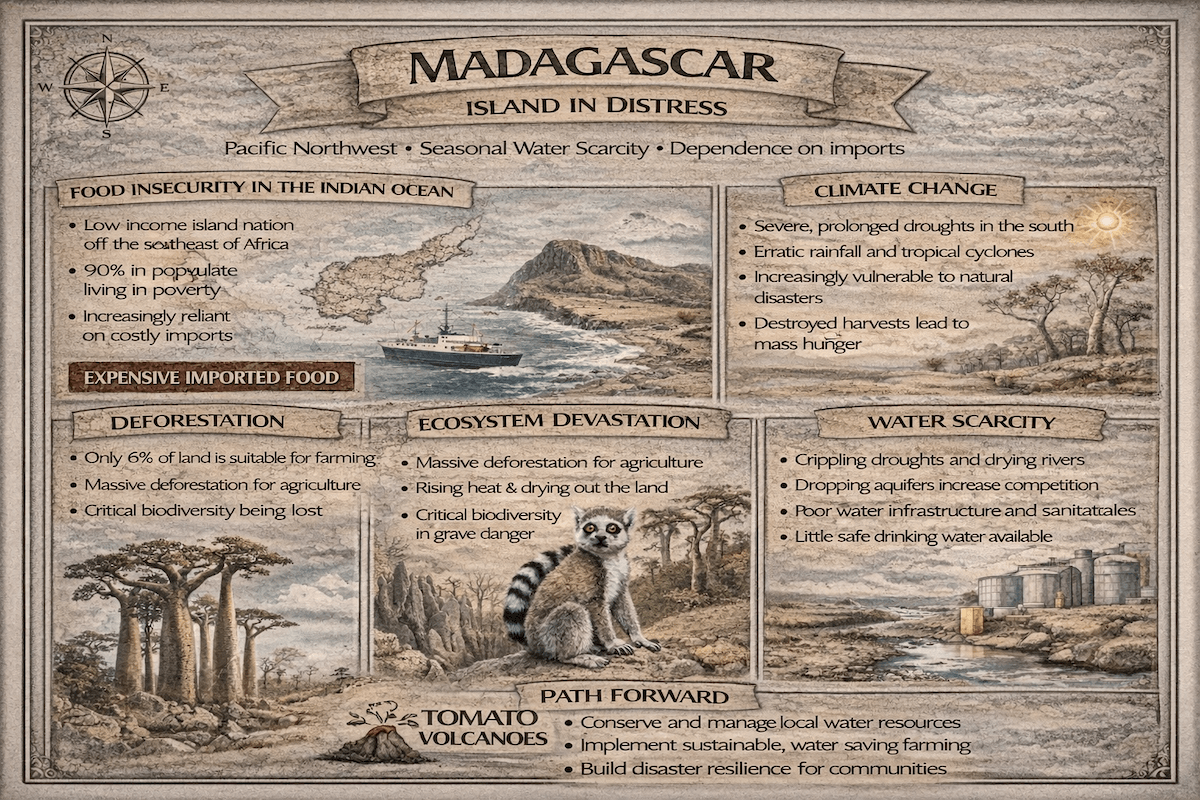
| Madagascar | Food insecurity | Drought + soil degradation | Regenerative farming systems |
| Fiji | Climate exposure | Storm and water stress | Resilient local food infrastructure |
| Cyprus | Water pressure | Arid agricultural conditions | Efficient irrigation and planning |
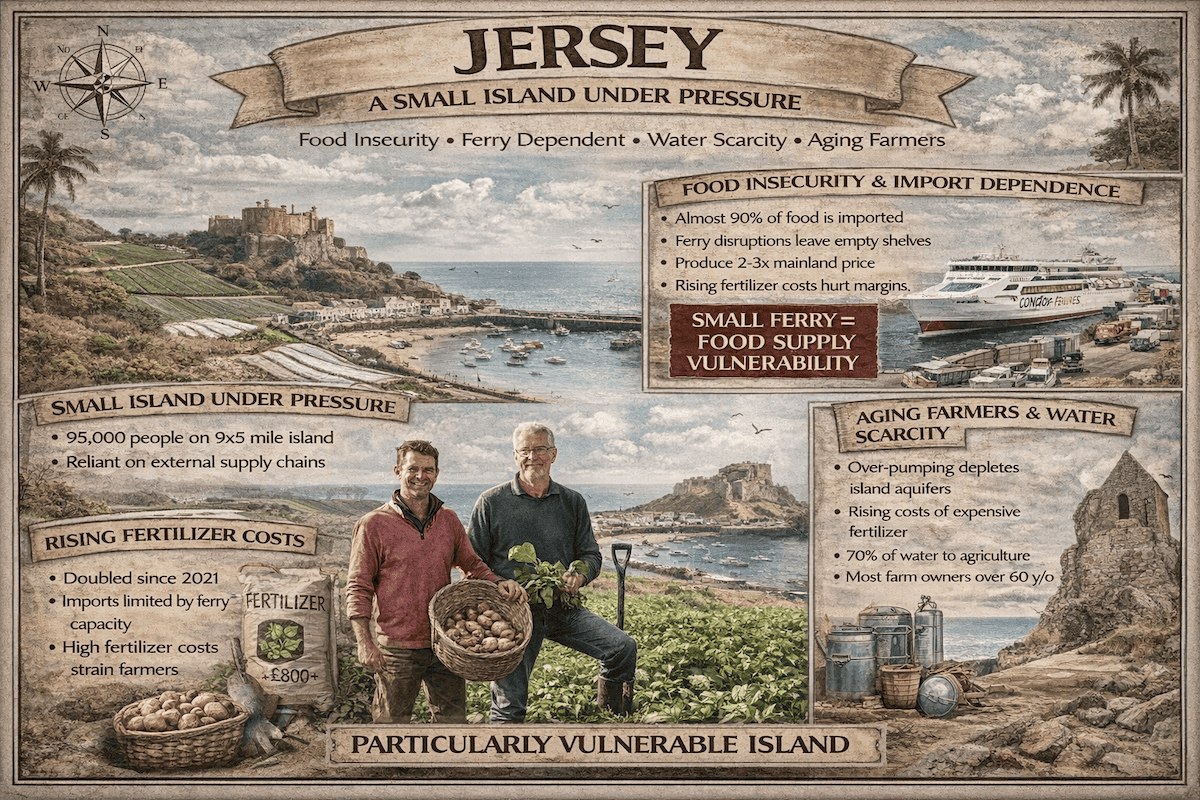
| Jersey | Import dependence | Limited land + input costs | Intensive local food production |
| Easter Island | Remoteness | Supply chain exposure | Greater food self-reliance |
Key insight: Different islands face different constraints, but nearly all can benefit from stronger local food production, better water management, and more resilient supply strategies.
Across many island environments, the biggest barrier to local agriculture is not interest or labor—it is water. That is why rainwater harvesting, efficient irrigation, and hybrid water systems are central to long-term food resilience.
Use practical calculators and planning tools to estimate local food production, water capture, yield potential, local growing scenarios, and community food impact.
No single island solution fits every geography, climate, economy, or food culture. But the pattern is clear: islands that expand local food production become less vulnerable to shipping disruptions, imported inflation, freshwater stress, and supply chain shocks.
That is why Feed An Island focuses on practical, scalable strategies that help communities grow more food locally, strengthen food independence, reduce pressure on fragile supply chains, and improve long-term resilience.
Explore the island pages above, compare the different constraints each one faces, and dive deeper into the systems, tools, and concepts that can help transform island food security.